Youth work and district camping
Gathered events for young people were, for most of the twentieth century, the most visible thing a Methodist district did. The record of this district's final decades is dominated by them: camps, rallies, retreats, leadership labs and assemblies, scheduled year after year.
An independent historical reference. This site is an independent reference to Methodist history in the Tyler and East Texas area. It is not a district office, it is not affiliated with or endorsed by any denominational body, and it does not receive or answer correspondence on behalf of one. The Northwest District of the Texas Annual Conference maintains its own current pages at txcumc.org.
Descended from the camp meeting
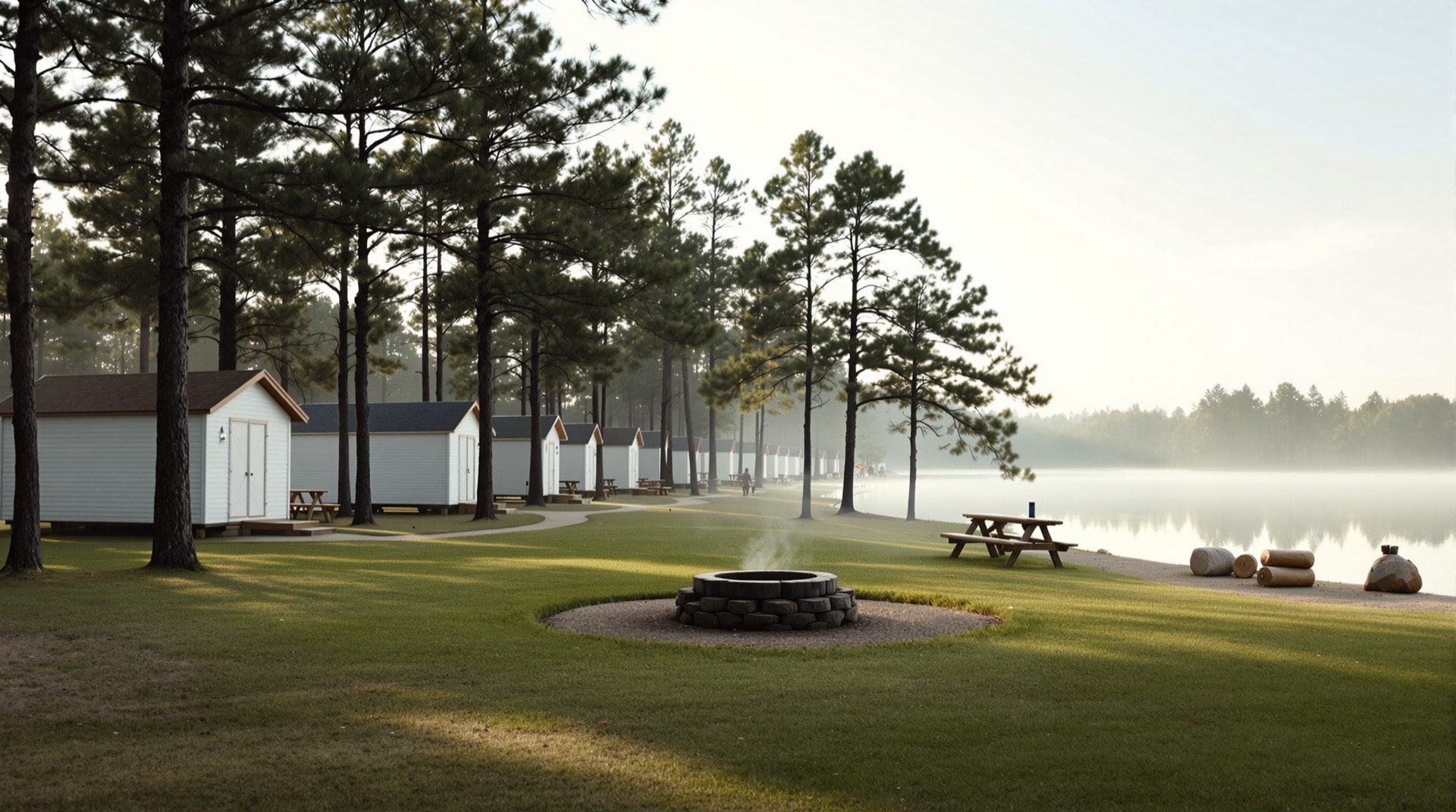
The form is old. The multi-day gathering at a fixed ground, drawing families from a wide area who camped on site, was the characteristic institution of frontier Methodism in this region, and it never disappeared — it specialised. As settlement thickened and congregations acquired their own buildings, the general camp meeting narrowed toward particular constituencies, and young people became the principal one. By the twentieth century the district camp was a summer fixture with a programme, a staff and a registration process, held at conference-owned grounds rather than on a farmer's field.
The logic that made it work was the same in 1900 and 2000. A district covering several counties contained many congregations too small to sustain a peer group for teenagers. Concentrating them for a week solved a problem that no individual congregation could solve alone.
What surviving district records show
District records from 2010 into 2019 show the shape of the annual cycle. District camps appear each year under a settled name. District youth rallies recur, sometimes more than once a year and at varying host congregations. A leadership lab with an application process appears repeatedly. Mid-winter camps balance the summer programme. There are retreats for particular groups, a youth academy at conference level, mission and outreach projects run through the summer, and a good deal of transport and logistics.
Alongside the events sits a second and equally consistent category: training and safeguarding. Sexual ethics training appears from the earliest surviving notices in 2010 and recurs; safeguarding policy has its own standing page; certified lay ministry and youth-worker training modules run continuously. That the two categories grow together is the significant fact. Gathered youth work at district scale required an apparatus of screening, policy and training around it, and the record shows that apparatus present throughout the period documented.
Volunteers and cost
These events ran on unpaid labour, mostly adult, mostly drawn from the same congregations that sent the young people. Cooking, driving, construction, maintenance and supervision were volunteer functions, and the district's men's and women's organisations supplied much of that workforce. Cost was managed through registration fees kept deliberately low, congregational subsidy, and district and conference funds — one recurring notice type in the surviving index is a call for camp staff, another is a scholarship or grant announcement.
Researching this material
Camp and rally records survive unevenly and are rarely catalogued as such. Registration lists, programmes and photographs generally stayed with the camping ground or the conference office rather than with congregations, and are best pursued through the conference's own archives — see the denominational archives. Local newspapers covered district youth events routinely, with names of participants, and the Portal to Texas History is the practical way to search that coverage.
One caution specific to this subject. Material about young people is frequently recent enough that the individuals named in it are living, and privacy expectations apply that do not apply to a nineteenth-century appointment list. No participant in any twentieth- or twenty-first-century youth event is named, no identifiable photograph is published, and the work is described only in general terms. Nothing on this page is an activity, a service, or a programme that can be joined or contacted; it is a historical description. See about this site for the full scope statement.