Organised women’s work
For most of the period covered here, the best-organised, best-minuted and best-funded body inside a Methodist congregation was the women's society. It is also, for the same reasons, one of the richest surviving sources for what congregational life was actually like.
An independent historical reference. This site is an independent reference to Methodist history in the Tyler and East Texas area. It is not a district office, it is not affiliated with or endorsed by any denominational body, and it does not receive or answer correspondence on behalf of one. The Northwest District of the Texas Annual Conference maintains its own current pages at txcumc.org.
Structure
Organised women's work in Methodism ran on a parallel structure to the church's own: a society or unit in the local congregation, a district organisation above it, a conference organisation above that, and a national body above that. Each level had its own elected officers, its own treasury, its own programme year and its own minutes. The district organisation held gatherings — assemblies, luncheons, fall meetings — which brought delegates from every congregation together, and district records from its final decade show exactly such events still running annually.
That parallel structure is the single most important thing to understand about these bodies. They were not a committee of the church council. They raised their own money, decided their own giving, elected their own leadership and kept their own books, and a congregation's official minutes may therefore be silent about activity that the society's minutes record in detail.
What the work consisted of
Four strands recur across the whole period. Mission support: money raised locally and directed outward, to hospitals, schools, deaconess work and overseas missions, through the organisation's own channels. Study: an annual programme of reading and presentation, frequently on subjects — international affairs, race, poverty, public health — well outside the ordinary devotional range. Practical provision: the food, hospitality and material relief that accompanied every funeral, revival, building project and local emergency. And property: it is startling how often the kitchen, the fellowship hall, the parsonage furnishing or the first indoor plumbing in a country church was paid for by the women's society rather than the trustees.
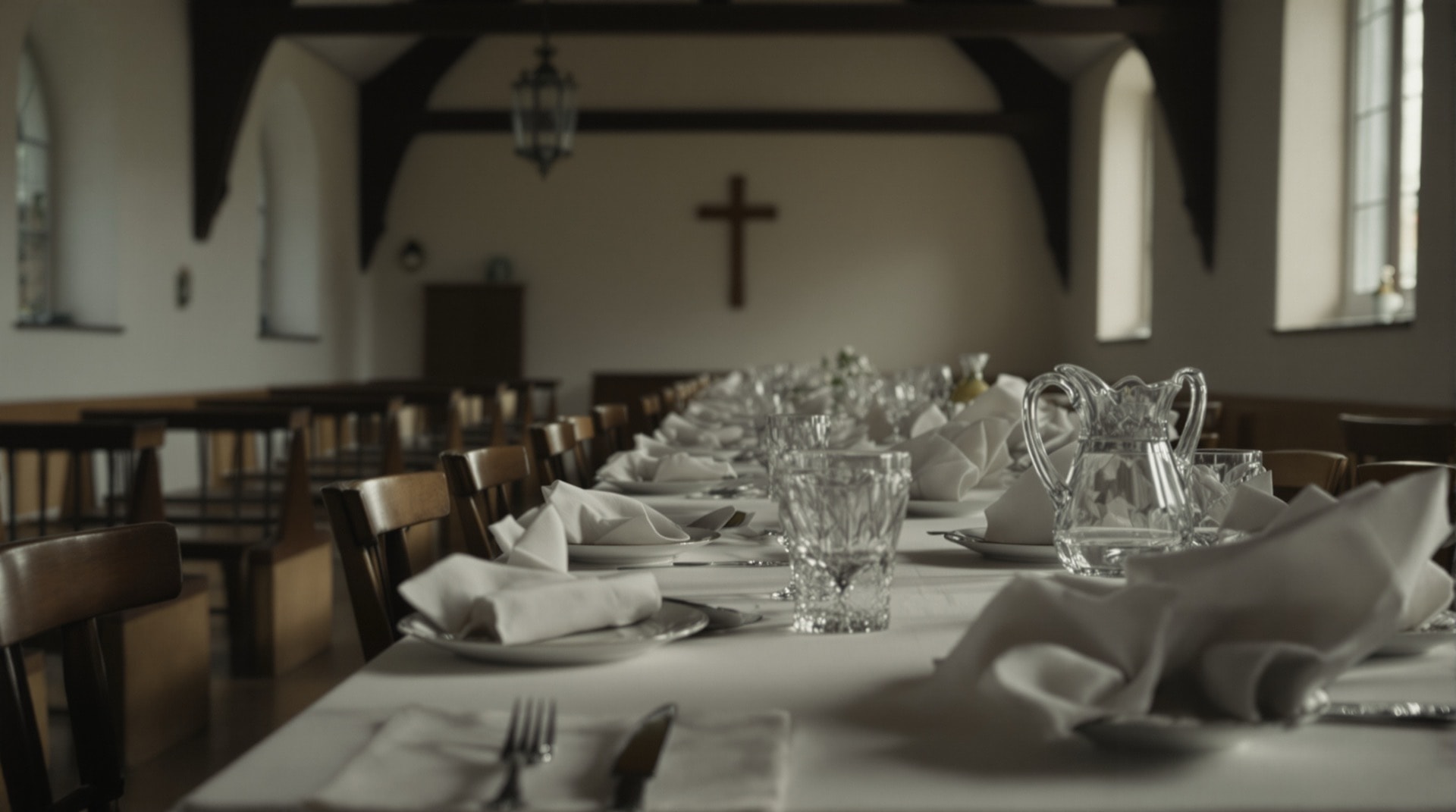
The fundraising machinery behind this was formidable and almost entirely undocumented in official church records: bazaars, suppers, cookbooks, quilts, rummage sales, cantatas and seasonal markets. The surviving notices from this district's later years still show the same forms — a Christmas bazaar, a fall assembly luncheon, a workshop — a century after the pattern was set.
Names and reorganisations
The organisational name changed repeatedly across the period, following each denominational merger and each reorganisation of mission work. A researcher will meet foreign and home missionary societies, ladies' aid societies, a woman's society of Christian service, a wesleyan service guild, and the later unified organisation, depending entirely on which decade the document comes from. These are not different bodies so much as successive constitutional forms of the same local group, and a congregation's continuous run of minute books will often carry three or four names on its spines.
The names are noted so researchers recognise one lineage; this is not an authoritative denominational chronology.
Where the records are
Local society minute books are the prize, and they survive erratically. They were kept by successive secretaries in whatever book came to hand, stored in the church rather than the archive, and lost when congregations closed or merged. When they do survive they are frequently in a member's family papers rather than in any institution.
Failing those, three routes are productive. District and conference organisation records were deposited more systematically and are held with conference papers — begin with the denominational archives. Local newspapers reported society meetings, officer elections and fundraising events in some detail, and are searchable through the Portal to Texas History. And the conference journal's annual reports carry the aggregate giving figures, which at least establish that a society existed in a given congregation in a given year.
This page describes a historical form of organisation. It is not an account of any present-day body, and nothing described here can be joined or contacted. See resources for the collections themselves.